PPL theory 2 of 9: Aircraft general knowledge
How a light aircraft is built and why it works. Airframe, engine, propeller, fuel, electrics and instruments.
Een licht vliegtuig lijkt van buiten eenvoudig, maar wie de motorkap opentrekt of onder de vleugel door loopt, ziet al snel hoe elk onderdeel een specifieke taak heeft. De vleugel draagt het gewicht, het staartvlak houdt de neus stabiel, en de romp verbindt alles tot één geheel dat luchtdruk kan weerstaan. Wie begrijpt waarom een carburateur ijs kan vormen op een bewolkte dag van twaalf graden, of waarom een druppel water op de bodem van de brandstofsump er anders uitziet dan kerosine, kijkt anders naar de preflight inspection.
Hetzelfde geldt voor de instrumenten op het dashboard. Een geblokkeerde pitotbuis geeft niet gewoon geen waarde meer, hij geeft een verkeerde waarde, en dat verschil heeft grote gevolgen voor hoe je een situatie beoordeelt. Dit playbook bouwt die technische kennis systematisch op, van vliegtuigstructuur tot magneetontsteking, zodat de theorie achter de vliegtuigcheck iets wordt wat je begrijpt in plaats van iets wat je onthoudt.
Name the main parts of the airframe and what each carries: wings, fuselage, empennage, control surfaces, landing gear.
Suggestion: Use a photo of the aircraft you will fly in.Follow the four-stroke cycle of a piston engine and explain mixture, carburettor icing and why we check magnetos.
Suggestion: Explain it to someone who does not fly. If they get it, you get it.Study the fuel system: tanks, selector, primer, contamination checks and what water in fuel looks like.
Suggestion: Look up the fuel drain procedure of your training aircraft.Learn the pitot-static instruments: airspeed indicator, altimeter, vertical speed, and what a blocked pitot or static port does.
Suggestion: Cover the diagram and redraw it from memory.Ten practice questions on aircraft general knowledge.
Suggestion: Write down every term you had to look up.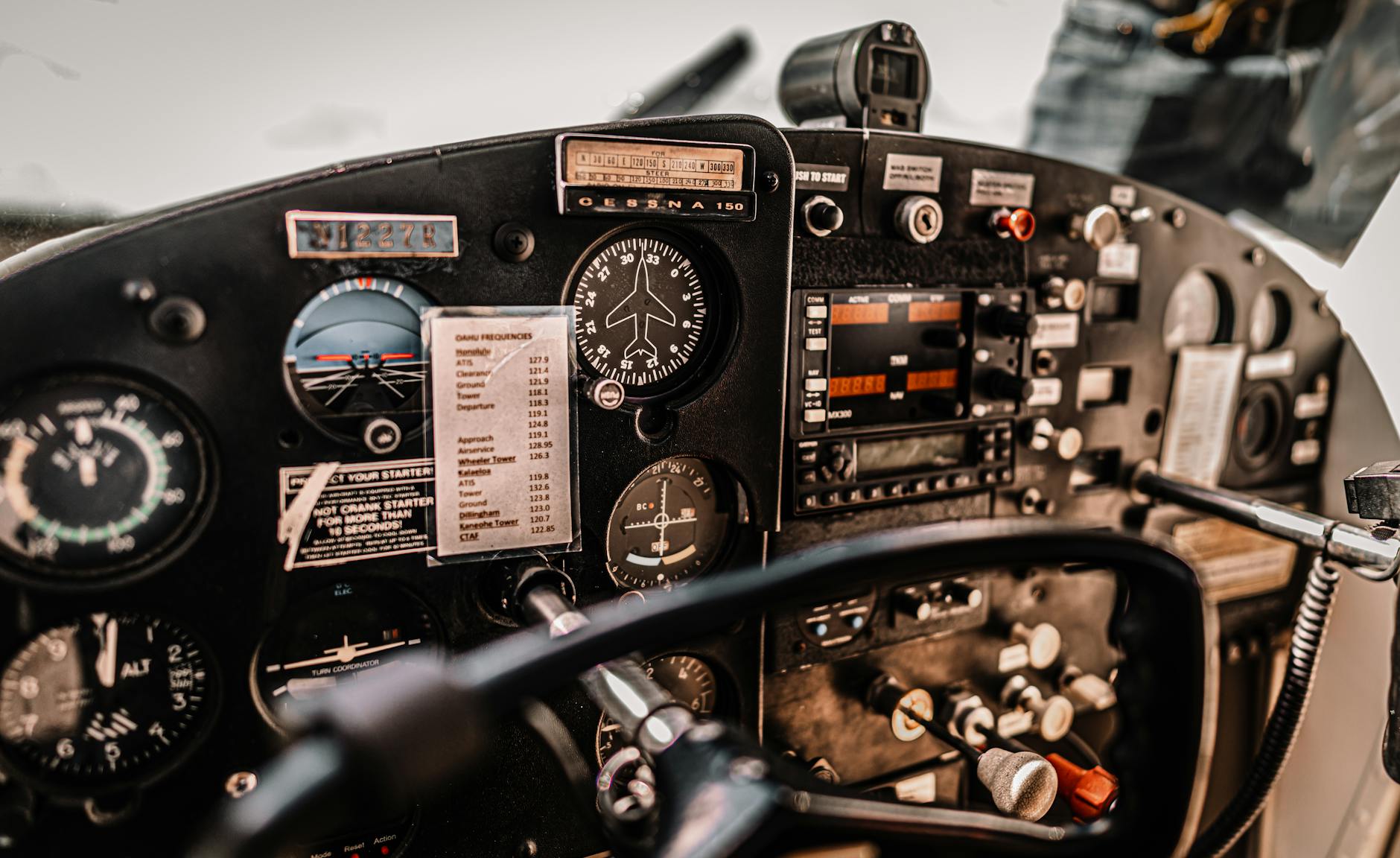
Next
PPL theory 3 of 9: Flight performance and planning
Related playbooks
PPL theory 9 of 9: Communications
Talking on the radio without freezing. Phraseology, the alphabet, readbacks, joining and leaving a circuit and what to say when it goes wrong.
PPL theory 8 of 9: Principles of flight
Why the aircraft flies and why it stops flying. Lift, drag, stalls, spins, stability and the effect of flaps and load factor.
PPL theory 7 of 9: Operational procedures
What to do when things go wrong and how to do routine things right. Emergencies, fire, ditching, wake turbulence, noise and search and rescue.
PPL theory 6 of 9: Navigation
Getting from A to B by chart, compass and clock. Headings, wind correction, timing and the radio aids you may use as backup.
PPL theory 5 of 9: Meteorology
Reading the sky. Pressure, wind, cloud types, fronts, fog, icing and the reports and forecasts you will decode every flight.
PPL theory 4 of 9: Human performance
Your body and mind in the cockpit. Hypoxia, the inner ear, vision, stress, fatigue and the decisions pilots get wrong.
by PlayTryBe team