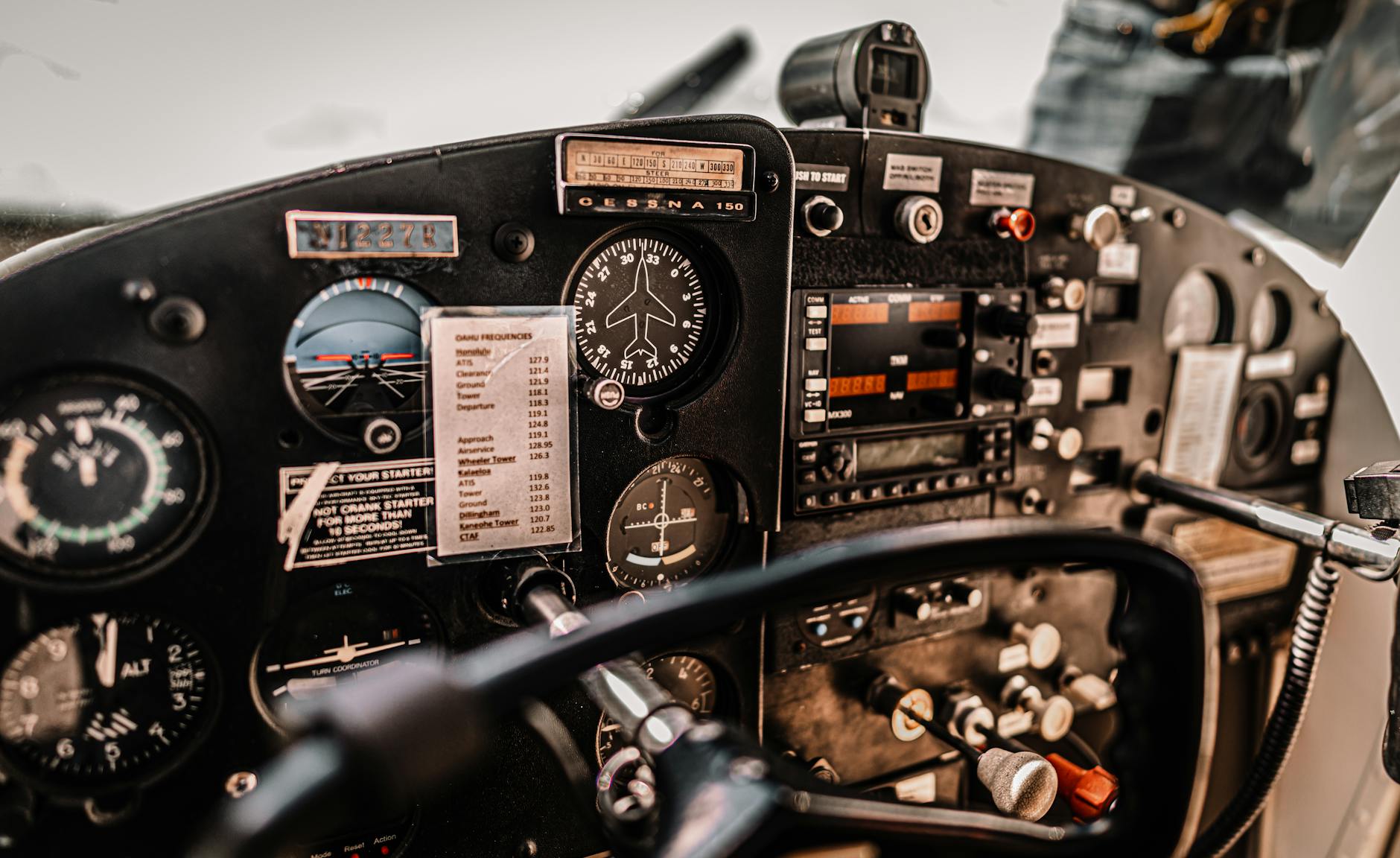
PPL theory 9 of 9: Communications
Talking on the radio without freezing. Phraseology, the alphabet, readbacks, joining and leaving a circuit and what to say when it goes wrong.
De microfoon voelt de eerste keren zwaar aan, niet vanwege het gewicht maar vanwege de stilte die erop volgt. Radiotelefonie heeft zijn eigen ritme: je wacht op een opening, drukt de knop in, spreekt en laat los. Wie dat ritme niet kent, vult de pauze voor de reply op met herhalingen of voegt woorden toe die er niet in horen. De meeste studenten ontdekken dat ze de frase al kennen, maar dat hun mond aarzelt zodra er een echte frequentie op de achtergrond ruist en een andere piloot iets zegt dat ze niet helemaal verstaan.
Dit playbook gaat over precisie in kleine dingen: het verschil tussen "wilco" en een readback, de volgorde van een mayday call, de manier waarop je een circuit verlaat zonder de toren te verrassen. Wie die details kent, hoeft niet meer na te denken over wat hij zegt. Daardoor ontstaat ruimte om te luisteren naar wat er terugkomt.
Learn the phonetic alphabet and numbers until you can spell your registration without thinking.
Suggestion: Spell your street name out loud in the shower.Write out a full departure: request taxi, line up, take-off, leaving the zone. Say it out loud with pauses for the reply.
Suggestion: Record yourself and listen back.Study which items must be read back: runway, clearances, altimeter settings, frequency changes.
Suggestion: Readbacks are not politeness. They catch errors.Learn the emergency calls: mayday and pan pan, what to include and in which order.
Suggestion: Practise once a week even after the exam.Ten practice questions on communications, then listen to a live tower frequency for fifteen minutes.
Suggestion: Live ATC feeds online are free and honest practice.Related playbooks
PPL theory 8 of 9: Principles of flight
Why the aircraft flies and why it stops flying. Lift, drag, stalls, spins, stability and the effect of flaps and load factor.
PPL theory 2 of 9: Aircraft general knowledge
How a light aircraft is built and why it works. Airframe, engine, propeller, fuel, electrics and instruments.
PPL theory 1 of 9: Air law
The rules that keep aircraft apart. Airspace classes, visual flight rules, right of way and what your licence lets you do.
PPL theory 7 of 9: Operational procedures
What to do when things go wrong and how to do routine things right. Emergencies, fire, ditching, wake turbulence, noise and search and rescue.
PPL theory 6 of 9: Navigation
Getting from A to B by chart, compass and clock. Headings, wind correction, timing and the radio aids you may use as backup.
Comfortable in the air, clothes that travel with you
A flight is more enjoyable in the right outfit. Here's how to dress smart for short and long flights.
PPL theory 5 of 9: Meteorology
Reading the sky. Pressure, wind, cloud types, fronts, fog, icing and the reports and forecasts you will decode every flight.
PPL theory 4 of 9: Human performance
Your body and mind in the cockpit. Hypoxia, the inner ear, vision, stress, fatigue and the decisions pilots get wrong.
PPL theory 3 of 9: Flight performance and planning
Mass and balance, take-off and landing distances, fuel planning. The numbers that decide whether a flight is safe before you start the engine.
by PlayTryBe team

